TPO Roofing in Dallas, TX
TPO roofing in Dallas puts a reflective, heat-welded white membrane over your flat roof, cutting cooling costs and standing up to relentless Texas sun.
- Dallas & the DFW metroplex
- Flat & low-slope roofs only
- Inspect, price, repair
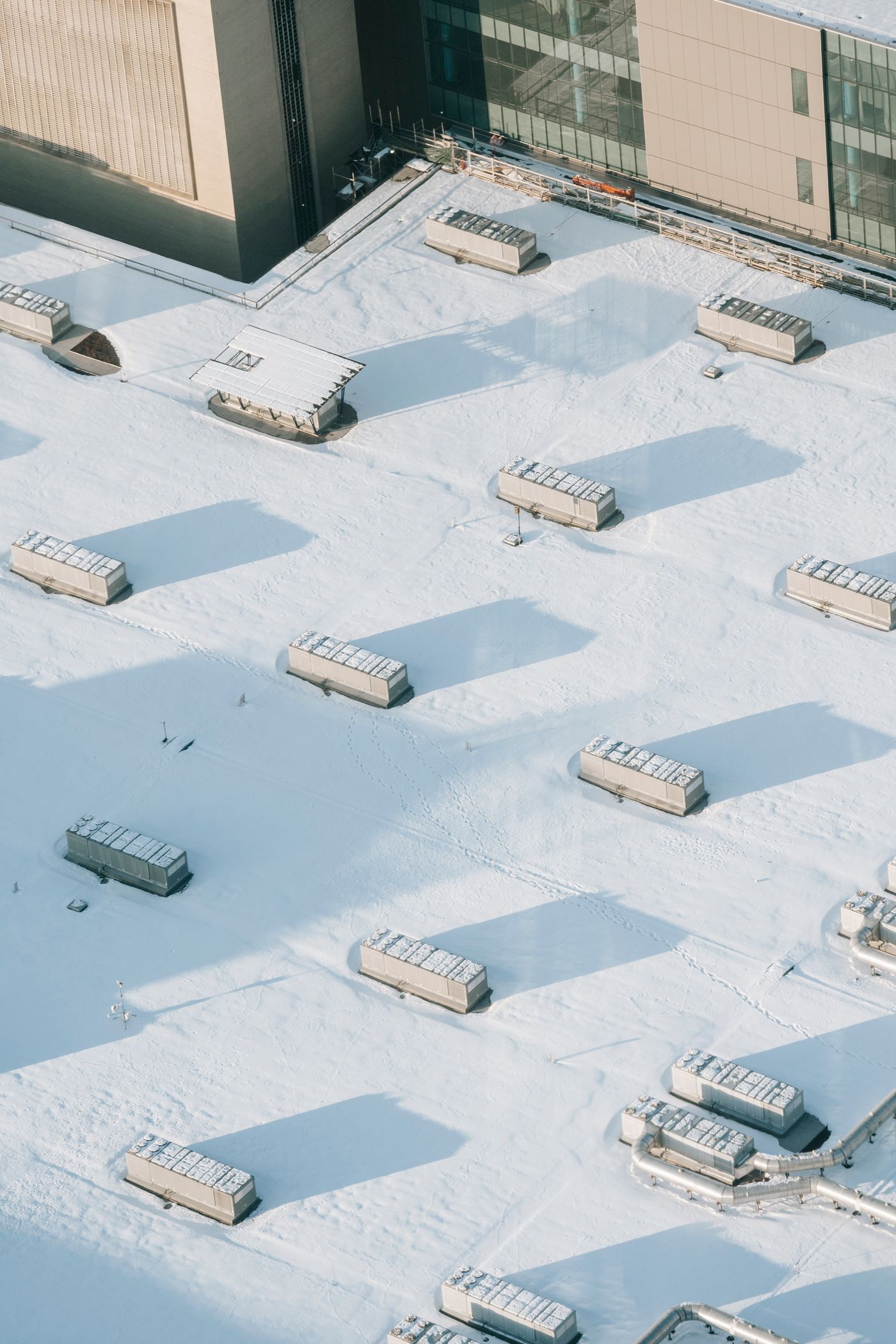
TPO roofing in Dallas has become one of the most popular choices for low-slope commercial and residential roofs, and for good reason. TPO is a single-ply thermoplastic membrane installed in wide sheets with heat-welded seams that fuse into one continuous, watertight surface. Its reflective white surface bounces back the intense Texas sun instead of soaking it up, which keeps the roof cooler and takes load off air conditioning through brutal Dallas summers.
For flat-roofed buildings across Downtown, Deep Ellum, and the Design District, and for modern flat-roofed homes in Lakewood and East Dallas, TPO offers a strong mix of energy performance, durability, and value. A local flat-roof contractor who installs TPO can tell you whether it suits your building and how it compares to other membranes. This page covers how TPO works, why it fits Dallas, and how it is installed.
Why TPO works well in Dallas
The single biggest advantage of TPO in Dallas is its reflective white surface. In a climate where summer rooftop temperatures soar, a reflective membrane keeps the roof and the space below it cooler, which can meaningfully reduce cooling costs on both commercial buildings and homes. That same reflectivity slows the UV aging that breaks down darker roofs faster under the Texas sun.
TPO also handles the mechanical stress Dallas throws at flat roofs. The heat-welded seams create a bond as strong as the membrane itself, so there are no adhesives to fail at the laps over time. That matters where thermal cycling and wind constantly work at a roof. TPO resists tears, punctures, and the effects of ponding water better than many older systems, which is why it shows up on so many re-roofs.
- Reflective and cool. The white surface bounces UV and heat, easing cooling loads in the Texas summer.
- Heat-welded seams. Welded laps fuse into one surface, removing the adhesive seams that fail on older roofs.
- Durable. Strong resistance to tears, punctures, and ponding water on a low-slope roof.
- Good value. A competitive balance of energy performance and cost for many Dallas buildings.
How TPO roofing is installed
A TPO installation starts with a sound substrate. On a re-roof, a local roofer tears off the failed membrane and any wet insulation down to a solid deck, then builds back up with insulation, often tapered to correct drainage, and a cover board that gives the membrane a firm, even base. Getting this base right is what makes the finished roof drain properly and last.
The TPO membrane is then rolled out and attached, either fully adhered with bonding adhesive or mechanically attached with fasteners and plates, depending on the building and wind exposure. The heart of the job is the seams: adjoining sheets are joined with a hot-air welder that melts the surfaces together into a monolithic, watertight bond. Flashing is welded in at parapet walls, curbs, and penetrations, and drains and scuppers are detailed so water leaves the roof cleanly.
TPO compared to other flat roof systems
TPO is not the only single-ply option, and the right choice depends on the building. Compared to EPDM, TPO's white surface reflects far more heat, which is a real advantage in Dallas, while EPDM's black rubber is prized for flexibility through temperature swings. Compared to PVC, TPO is often more cost-effective, though PVC has an edge in chemical and grease resistance that matters for restaurants.
Against older built-up and modified bitumen systems, TPO installs faster, weighs less, and brings reflectivity those darker roofs lack. That said, the best system is the one matched to your building, budget, and how the roof is used. A local flat-roof contractor can lay out the trade-offs honestly and give you upfront pricing on the option that fits.
- vs. EPDM roofing. TPO reflects more heat; EPDM is prized for cold-weather flexibility.
- vs. PVC roofing. TPO is often more affordable; PVC leads on grease and chemical resistance.
- vs. built-up roofing. TPO is lighter, faster to install, and reflective.
TPO for commercial and residential flat roofs
TPO fits a wide range of Dallas buildings. On commercial properties, its reflectivity and welded seams make it a workhorse for offices, retail, and warehouses where large, unbroken low-slope areas need reliable waterproofing and lower cooling bills. For a bigger commercial project, TPO often anchors a broader commercial flat roofing plan.
On the residential side, TPO suits the flat roofs and modern additions found across Oak Cliff, Bishop Arts, the M Streets, and Uptown, giving homeowners a clean, energy-smart membrane. Whether new construction or a re-roof, a local flat-roof contractor sizes the insulation, details the drainage, and welds the seams so the finished TPO roof performs in the Dallas climate for the long haul.
Why choose a local flat-roof contractor for TPO
TPO lives and dies by the quality of its seams and flashing, so installation skill matters enormously. A local flat-roof contractor who knows Dallas has the hot-air welding experience and the low-slope detailing to make every seam watertight and every penetration sound. You get upfront pricing and a system matched to your building, with no obligation.
Local know-how also means the roof is specified for real Texas conditions, from insulation and drainage to wind attachment. Business hours are Mon-Fri 7am-6pm and Sat 8am-2pm, and the focus is a reflective, durable TPO roof that keeps your building cooler and drier for years.
Talk to a Local Flat-Roof Contractor
Describe your roof and the problem and get straight answers with upfront pricing. No obligation, and no pressure to buy more than the roof needs.
Call 000-000-0000More Dallas Flat Roofing
TPO Roofing FAQ
What is TPO roofing?
TPO is a single-ply thermoplastic membrane installed in wide sheets with heat-welded seams. Its reflective white surface bounces back UV and heat, making it a popular, energy-smart choice for flat and low-slope roofs in Dallas.
Is TPO roofing good for the Dallas climate?
Yes. TPO's reflective white surface eases cooling loads in the intense Texas summer, and its welded seams and puncture resistance hold up well to thermal cycling, wind, and ponding water on a low-slope roof.
How is TPO different from EPDM?
TPO is a reflective white thermoplastic with heat-welded seams, while EPDM is a black rubber membrane valued for flexibility. In hot Dallas summers, TPO's reflectivity gives it an energy advantage on most flat roofs.
How much does TPO roofing cost in Dallas?
Cost depends on roof size, insulation, drainage work, and attachment method. A local flat-roof contractor provides upfront pricing with no obligation. Call 000-000-0000 to get started.
Get a TPO Roofing Quote
Mon–Fri 7am–6pm · Sat 8am–2pm · Dallas, TX · upfront pricing, no obligation