PVC Roofing in Dallas, TX
PVC roofing in Dallas, TX gives flat and low-slope buildings a heat-welded, chemical-resistant membrane built to shrug off Texas UV and standing water.
- Dallas & the DFW metroplex
- Flat & low-slope roofs only
- Inspect, price, repair
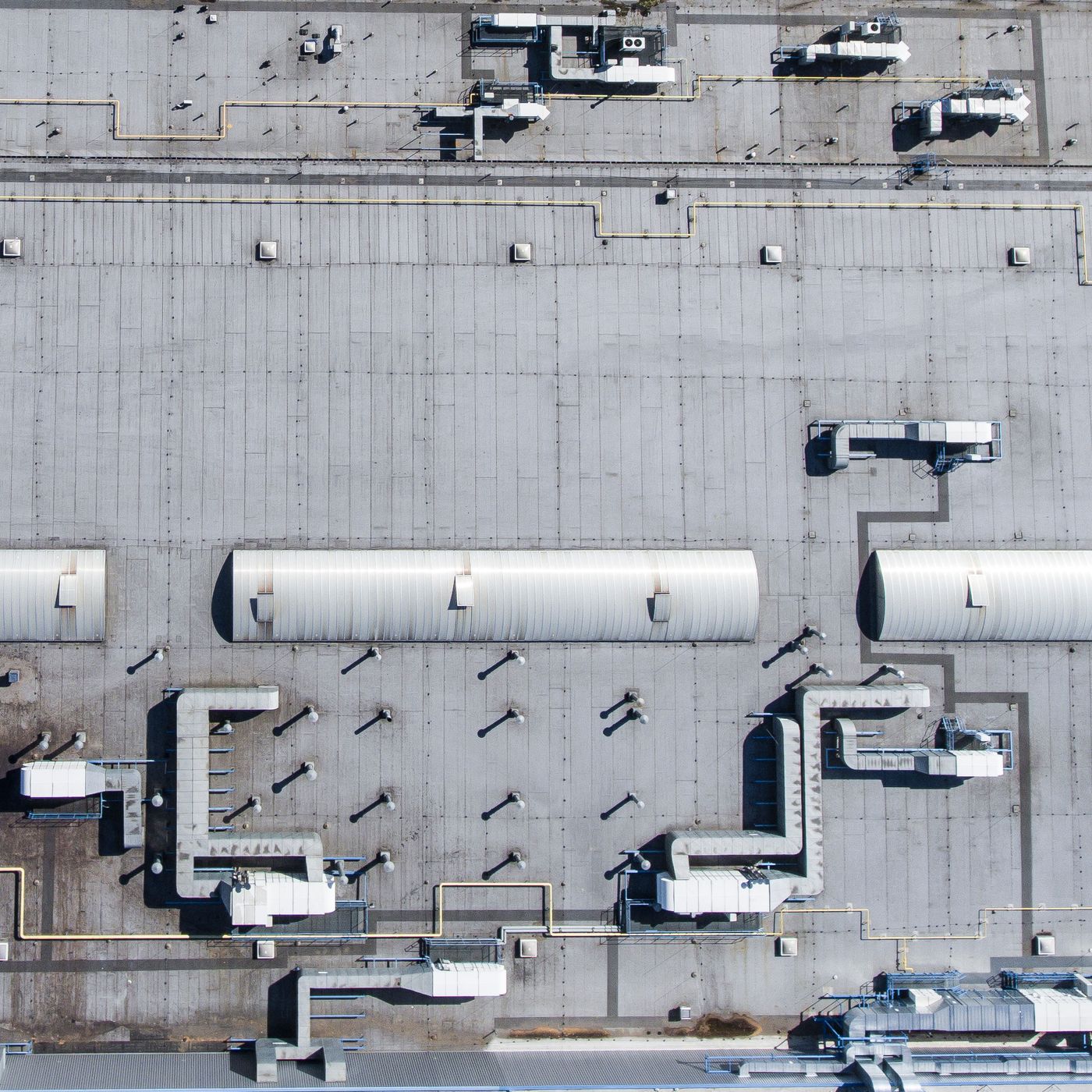
PVC roofing in Dallas, TX is a single-ply flat roof system where each seam is heat-welded into a continuous, watertight sheet, which makes it a strong fit for the ponding water and intense sun that flat roofs face across North Texas. A local flat-roof contractor installs the reflective white membrane over cover board and insulation, then welds every lap and detail so the finished surface behaves like one piece rather than a field of glued joints.
Buildings in Downtown, Deep Ellum, and the Design District often carry restaurants, kitchens, and rooftop grease exhaust, and this is where PVC really earns its place. The membrane resists animal fats, oils, and many chemicals that would degrade other flat roof materials, so it holds up around restaurant vents and older commercial building stock. For an owner comparing options, a local flat-roof contractor who knows Dallas can walk through where PVC makes sense versus a comparable membrane.
Why PVC Works on Dallas Flat Roofs
Dallas weather is hard on any low-slope roof. Summer surface temperatures climb, thermal cycling flexes the membrane day and night, and slow-draining areas hold ponding water long after a storm. PVC is formulated to stay flexible through that cycling, and the reflective white surface pushes solar heat back off the building instead of soaking it in, which can ease the load on rooftop HVAC units.
The defining feature is the heat-welded seam. Instead of relying on adhesives or tapes that can loosen over time, a local roofer fuses the overlapping sheets with hot air so the seam is as strong as the membrane itself. That matters in areas that pond near drains and scuppers, because welded laps do not wick water the way an aged adhesive joint can.
- Chemical resistance. Stands up to restaurant grease, oils, and rooftop exhaust common in Deep Ellum and Bishop Arts.
- Reflective surface. White membrane reflects Texas UV and can lower rooftop heat gain.
- Welded seams. Heat-fused laps create a monolithic surface with no reliance on tapes.
- Ponding tolerance. Handles the slow-draining low spots that plague older Dallas flat roofs.
How a PVC Roof Is Installed
A PVC installation starts below the membrane. A local flat-roof contractor evaluates the deck, adds tapered insulation to move water toward drains and scuppers, and sets a cover board to give the membrane a firm, impact-resistant base. Getting the slope right is often the difference between a roof that drains and one that ponds for days.
The membrane can be fully adhered or mechanically attached depending on the building, the deck, and North Texas wind exposure. Fully adhered systems bond the sheet to the substrate for a smooth look and strong uplift performance, while mechanically attached systems fasten the membrane in rows and are frequently faster on large warehouse roofs. Fleece-back PVC is another option when a contractor is going over an existing surface. Every penetration, parapet, and drain is then flashed and welded so the details are as sound as the field.
PVC vs. Other Flat Roof Membranes
PVC and TPO are both hot-air welded thermoplastics, and both use reflective surfaces, so owners often compare them directly. PVC carries stronger chemical and grease resistance, which is why it shows up on restaurants and buildings with heavy rooftop exhaust. If a building has no grease exposure and cost is the priority, a local roofer may point toward a comparable option like TPO roofing instead.
- PVC. Best where grease, oils, or chemicals hit the roof, such as restaurant rows in Uptown and Knox-Henderson.
- TPO. A welded, reflective alternative for buildings without heavy chemical exposure.
- Coatings. When a sound roof mostly needs UV and ponding protection, flat roof coatings can extend service life.
Maintenance and Service Life
A welded PVC roof is low-maintenance, but it is not no-maintenance. Keeping drains, scuppers, and gutters clear prevents ponding from sitting on the membrane, and clearing debris around HVAC penetrations reduces the chance of a puncture. Periodic checks of flashing at parapets and curbs catch small separations before water finds the insulation below.
When a seam or flashing detail does need attention, PVC is straightforward to repair because new material welds directly to the existing membrane. A local flat-roof contractor can spot-weld a damaged area or re-flash a penetration without tearing into the whole roof, which keeps businesses in the Design District and Trinity Groves running while the work happens.
Why Choose PVC in Dallas
PVC pairs a welded, watertight surface with real chemical resistance, a combination that suits the restaurants, retail, and older commercial buildings packed into neighborhoods like Deep Ellum and Bishop Arts. The reflective membrane also helps with the heat that defines a Dallas summer.
Working with a local flat-roof contractor who knows Dallas means the slope, drainage, and attachment method are matched to your building and to North Texas wind and hail, not to a generic template. You get upfront pricing and no obligation before any work is scheduled.
Talk to a Local Flat-Roof Contractor
Describe your roof and the problem and get straight answers with upfront pricing. No obligation, and no pressure to buy more than the roof needs.
Call 000-000-0000More Dallas Flat Roofing
PVC Roofing FAQs
How long does a PVC roof last in Dallas?
Service life depends on the system, the insulation, and how well drains stay clear, but PVC is a long-lived membrane when ponding is controlled and seams are properly welded. A local roofer can assess your specific roof and give upfront pricing with no obligation.
Is PVC better than TPO for a Dallas restaurant?
For buildings with rooftop grease exhaust, PVC usually wins because it resists oils and fats that can break down other membranes. For sites without that exposure, TPO roofing is often a close, cost-effective alternative.
Can PVC go over my existing flat roof?
Sometimes. Fleece-back PVC can be installed over certain sound substrates, but a contractor will check the deck, moisture, and insulation first. If the roof is saturated, a tear-off or replacement may be the better call.
Does a white PVC roof really help with cooling?
The reflective white surface pushes solar heat back off the building instead of absorbing it, which can reduce rooftop heat gain during a North Texas summer and ease the load on HVAC equipment.
Ready for a PVC Flat Roof in Dallas?
Mon–Fri 7am–6pm · Sat 8am–2pm · Dallas, TX · upfront pricing, no obligation